Why World Cup 2026 Could Be a Breakout Opportunity for Group Tour and Travel
The latest USTA research shows many travelers are planning fuller vacations around their World Cup experience

The 2026 FIFA World Cup is shaping up to be more than a sports event. For the group tour and travel sector, it is a chance to capture longer stays, broader itineraries, and higher visitor spending well beyond host stadiums. The latest U.S. Travel Association research, based on more than 9,500 respondents across 10 countries, shows that many World Cup travelers are not coming for a quick in-and-out visit. They are planning fuller vacations, more complex travel patterns, and experiences that extend beyond the match itself.
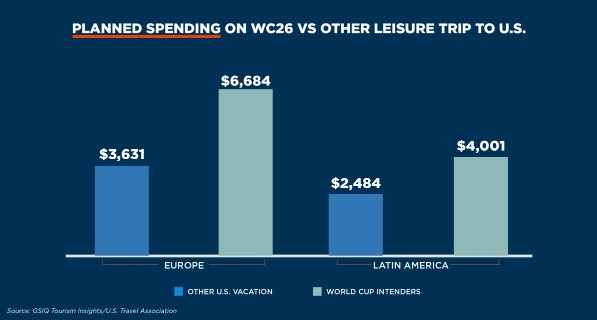
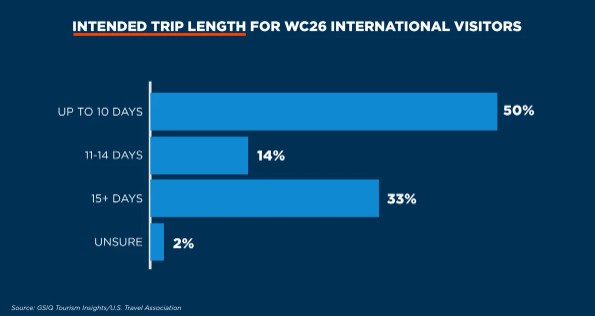
That matters for ABA members. The report shows international World Cup travelers expect to spend about $5,048 per person, roughly 1.7 times more than recent international visitors to the United States. One in three expects to stay more than two weeks, and 38% say they are likely to turn the trip into a broader holiday beyond match attendance. In other words, this is not just event demand. It is travel demand — and it is exactly the kind of demand that can support pre- and post-event itineraries, multi-city routing, packaged experiences, and added stopovers that benefit operators, tour planners, destinations, attractions, and lodging partners.
The research is especially encouraging for businesses outside the biggest gateway cities. More than 80% of international attendees say they are open to destinations beyond major gateways, and only 16% say they would be interested only in major cities such as New York, Los Angeles, or San Francisco. The report repeatedly points to spillover potential if the industry can make those trips easy to understand and purchase. For ABA members, that means the opportunity is not limited to host cities. It extends to regional destinations, secondary markets, and nearby attractions that can be packaged into a broader American travel experience.
Just as important, these travelers fit the profile of group and packaged travel buyers. Sixty percent of international attendees expect to travel with a partner, 38% plan to bring children, and 36% say they are likely to buy a package combining major trip elements. The report also shows strong interest in activities beyond soccer, including dining, sightseeing, relaxation, culture, nightlife, and other forms of entertainment. That mix suggests real room for bundled offers that combine match attendance with touring, attractions, dining, and transportation. For operators and tour companies, the takeaway is straightforward: build around the match, but do not stop there.
The spending profile also points to a practical product strategy. These travelers intend to spend more, but they are still value-conscious. Midscale hotels outperform other lodging types among World Cup intenders, and the report notes meaningful interest in simple, value-led packages and add-ons. That should resonate with the ABA membership. Travelers want convenience, clarity, and options. Products that simplify transfers, connect cities, add sightseeing, and help families navigate the trip are likely to be more compelling than standalone bookings.
There is, however, a warning in the data. Personal safety has emerged as the top concern among international attendees, while visa and border delays, flight disruptions, and disagreement with U.S. government policies are also influencing travel decisions. The demand is clearly there, but conversion is not automatic. The industry will need strong messaging, visible readiness, and a traveler experience that feels organized, welcoming, and dependable.
For ABA members, the core message is clear: World Cup travelers are coming to see soccer, but many also want to see America. The winners will be the companies and destinations that make it easy to do both. That means building itineraries that stretch beyond the stadium, packaging experiences for couples and families, and turning a global event into a gateway for broader group travel business. World Cup 2026 is a major tourism moment. For the bus and group travel industry, it could also be a long-tail business opportunity — if we are ready to meet it.