House Vote Signals Growing Bipartisan Scrutiny of Administration’s Trade Policy
Bipartisan vote on Wednesday a win for manufacturers as House votes to end imposed Canadian tariffs
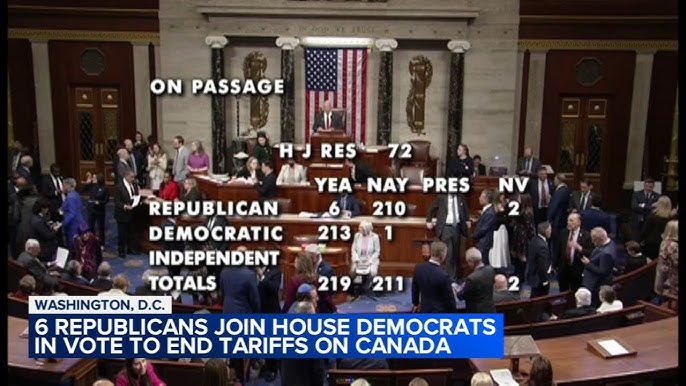
In a notable bipartisan move, the U.S. House voted to block a procedural provision that would have prevented resolutions opposing tariffs from coming to the floor. Three Republicans—Reps. Kevin Kiley of California, Don Bacon of Nebraska, and Thomas Massie of Kentucky—joined Democrats in voting against the measure.
Because of that vote, Democrats were able to bring a vote to the House floor on February 11 opposing the current tariffs on Canada and seeking to remove the emergency declaration used to justify them. In a bipartisan win for manufacturers and other segments of U.S. production, the House voted 219 to 211 to end the tariffs Trump imposed on Canada last year.
This vote is significant for several reasons. First, it shows there is real bipartisan concern about the economic impact of tariffs. Second, it demonstrates that some Republicans are willing to break with leadership on this issue, even as both the Speaker and the President oppose moving these resolutions forward.
While this likely won’t dramatically change the tariff landscape in the short term, it does mean tariff policy will continue to face scrutiny and difficult votes.. Over time, that could start to shift the conversation and build additional support for relief.
The vote is largely symbolic as it will still need to be approved by the U.S. Senate and then approved by Trump, who is very unlikely to sign it into law.
With Republicans holding a thin majority in the US House, the six Republican defections, along with a near-united front from Democrats, were enough to secure the votes.
The measure had been introduced by Democrat Gregory Meeks, who said that Trump had “weaponized tariffs” against allies and destabilized the global economy.
“Not only have these tariffs done immense harm to our relationship with Canada, pushing them closer to China, but they have also driven up prices here at home,” he said before the vote.
Representative Don Bacon from Nebraska was one of the six Republicans who crossed the aisle to join Democrats in approving the measure. Before the vote, he said, “tariffs have been a ‘net negative’ for the economy and are a significant tax that American consumers, manufacturers, and farmers are paying.”
Meeks, the top Democrat on the U.S. House Foreign Affairs committee, said the measure on Canada is the first of several bills he plans to introduce that aim to roll back Trump’s signature trade action.
ABA is closely tracking these developments and the growing bipartisan scrutiny of tariff policy. For the motorcoach industry, the stakes are particularly high. The ABA Advocacy team is using this momentum to re-energize and expand its Capitol Hill outreach to underscore a critical point: there is no domestic manufacturing base for over-the-road motorcoaches. As a result, tariffs on imported motorcoaches function not as protection for U.S. industry, but as a direct cost increase on American operators, small businesses, and the traveling public.
ABA continues to strongly advocate that there be no tariffs on motorcoach imports, given the absence of domestic production. At a minimum, ABA urges policymakers to ensure that any tariffs applied to imported vehicles do not include the value of U.S.-origin content incorporated into those vehicles, which accounts for about 40 percent of motorcoach components. Taxing American-made components embedded in imported motorcoaches only compounds the economic harm to U.S. workers and businesses.
As additional tariff-related measures are introduced in the House and Senate, ABA will remain actively engaged, working to ensure that policymakers understand the unique structure of the motorcoach industry and the unintended consequences of these trade actions for American jobs, travel, and tourism.