Derek Barrs: What Constructive Engagement Looks Like with Motorcoach Operators
The new administrator of the FMCSA talks with ABA about what matters for the future of motorcoach and group travel
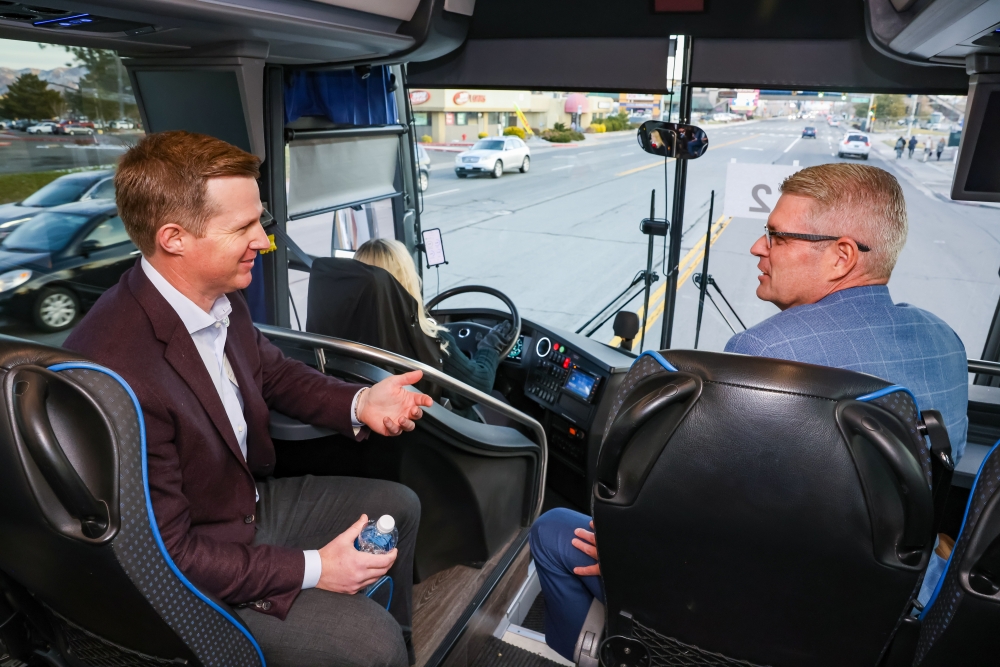
Derek Barrs has taken the helm at the Federal Motor Carrier Safety Administration (FMCSA) at a time when the agency’s decisions—on compliance expectations, enforcement focus, training oversight, and administrative systems—continue to shape the operating environment for passenger carriers. Confirmed by the U.S. Senate in October 2025, Barrs leads FMCSA’s work to enhance commercial motor vehicle safety and improve the efficiency of both freight and passenger transportation systems.
He arrives with a career spanning local, state, and national roadway safety roles, including experience as a deputy sheriff, a state trooper, and later as Chief of the Florida Highway Patrol, as well as work in strategic mobility solutions in the private sector. At the national level, he has held leadership roles with the Commercial Motor Vehicle Safety Alliance (CVSA), including chairing a committee focused on modernizing enforcement and industry systems.
For ABA members, the stakes are concrete. FMCSA’s mission covers “large trucks and buses,” but passenger operations bring unique operational realities—tight schedules, duty-of-care expectations, school and charter service requirements, and public-facing risk that is different in kind from freight. In his conversation with ABA, Barrs repeatedly returned to a theme operators will recognize: safety is the goal, but the path to safety must work in real-world conditions.
Why he took the role now—and why motorcoaches are central to his approach
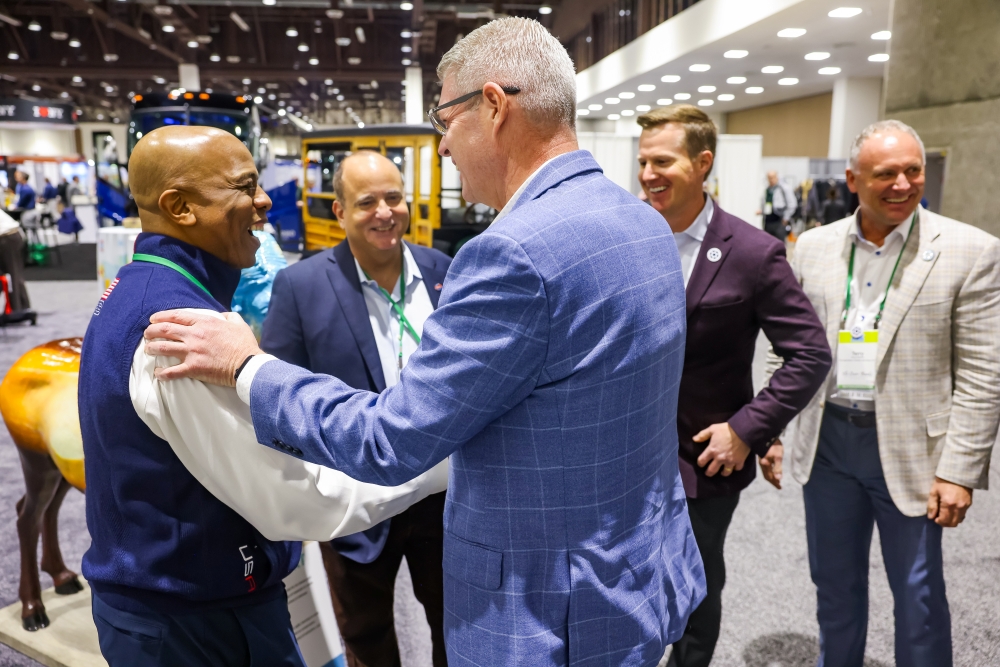
Barrs opened the conversation with a personal framing of the job’s weight and purpose.
“Let me first say what an absolute honor and a privilege it is to be in this role and do the work to which I’ve devoted much of my professional life,” he said.
From there, he described the role as an opportunity to connect his background to measurable outcomes—an important distinction in an industry where “safety culture” is often discussed broadly but where performance ultimately shows up in crash reduction and risk prevention.
“What drew me to FMCSA and what excites me most about stepping into this role is the opportunity to put my law enforcement background, previous experience in the commercial motor vehicle industry, and personal experience to work in a way that has a real, measurable impact on roadway safety,” Barrs said. “I’ve seen firsthand the consequences when safety breaks down, and I understand the responsibility that comes with protecting everyone who shares our roads.”
He also signaled that he sees momentum inside the agency and intends to build on it—without tying that momentum to politics, but rather to operational action and safety outcomes.
“This is also a meaningful moment in time for FMCSA,” he said. “FMCSA has taken more substantial, decisive actions over the past year that will help strengthen highway safety. This momentum matters, and it will continue.”
For the motorcoach sector, the clearest note came when Barrs pivoted directly to passenger carriers—making explicit that he wants more sustained engagement with the industry, not occasional touchpoints.
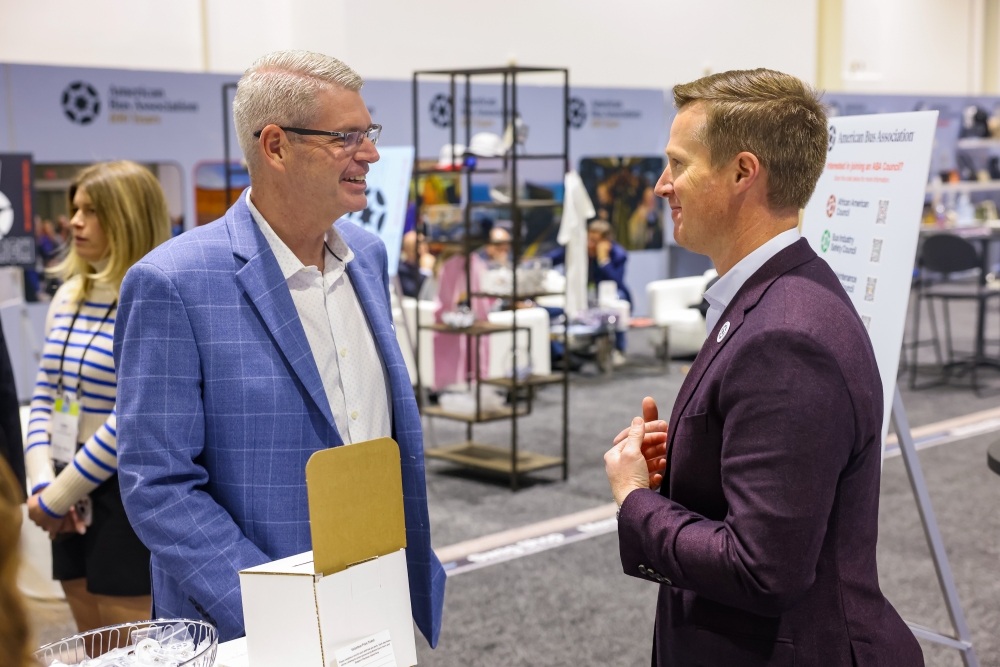
“I’m particularly excited about strengthening our relationship with the motorcoach industry,” Barrs said. “This sector plays a critical role in our transportation system, and that was reinforced for me during my time at this year’s American Bus Association’s Marketplace, where I had the opportunity to engage directly with operators, association leaders, and frontline professionals.”
Those conversations, he added, clarified both the pressures operators face and the shared interest in safety and reliability.
“Those conversations underscored both the challenges the industry is facing and the strong, shared commitment to safety and service,” Barrs said. “I see real opportunity to build on that engagement by listening closely, collaborating intentionally, and partnering in a way that moves the motorcoach industry forward while understanding its unique operational realities.”
He closed that thought with a clear statement of intent that speaks to both safety and the industry’s economic role.
“When we work together, we can advance safety, support innovation, and help ensure this vital sector that connects people together continues to thrive economically while delivering safe, reliable transportation to the public,” he said.
A first-year agenda built around clarity, accessibility, and targeted enforcement
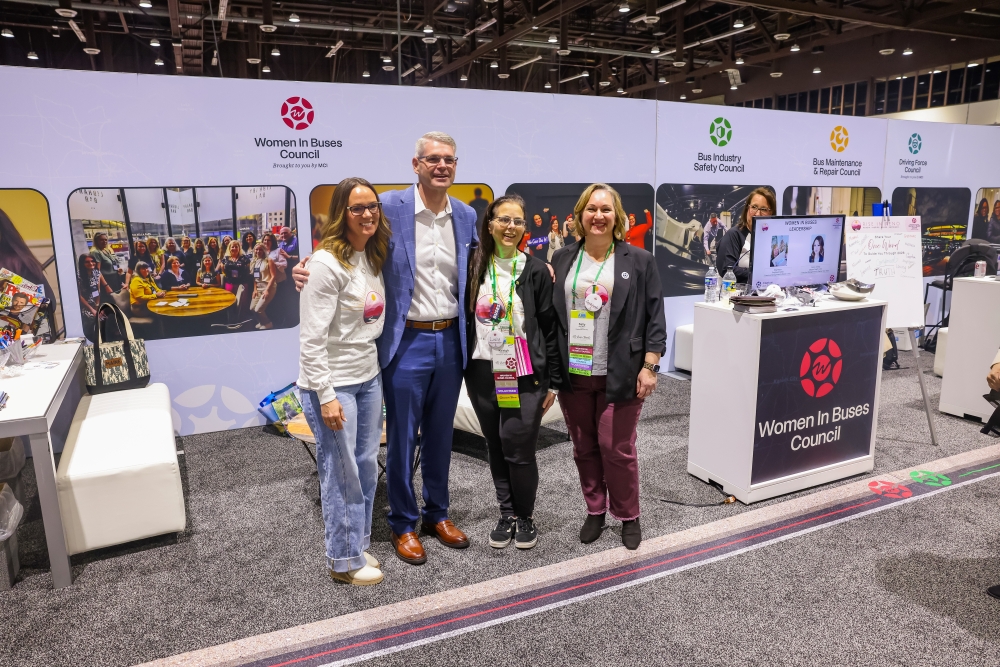
When asked about early priorities, Barrs described FMCSA as essential to both safety and the national transportation system’s health—then put his leadership intent in plain terms.
“FMCSA is an organization critical to the health of the nation’s supply chain and to the safety of America’s roadways,” he said. “I am here to advance the agency’s mission of reducing crashes, injuries, and fatalities involving large trucks and buses.”
He then outlined four principles he says will guide how the agency executes that mission—principles that matter to passenger carriers because they touch consistency, predictability, and fairness in how oversight shows up at the operator level.
“Executing this mission will be done keeping four core principles in mind: Communication, Outreach, Education, and Enforcement,” Barrs said. “That means communicating clearly and consistently with our workforce, states, and industry partners; expanding outreach so we are accessible and responsive; strengthening education so compliance is understood; and ensuring enforcement is targeted, fair, and focused on the highest safety risks.”
From an ABA member perspective, that sequence is meaningful. Passenger carriers often manage compliance across multi-state footprints, seasonal demand swings, and a workforce pipeline that can be strained by training availability and administrative lag. Clarity and predictability reduce risk—not just regulatory risk, but operational risk.
Barrs also emphasized modernization priorities that he framed as safety enablers, particularly where system integrity affects the entire industry’s credibility.
“At the same time, we are looking beyond day-to-day operations to broader, overarching improvements,” he said. “That includes modernizing the agency. We are rolling out our new registration system this year, focused on how we can help combat fraud across the industry, improve Entry-Level Driver Training, eliminate CDL mills, ensure state CDL issuance processes align with federal requirements, and continue to support the innovation agenda, always with safety at the center.”
For motorcoach operators, those items are not abstract. Registration and credential integrity help distinguish compliant, professional carriers from bad actors. Training quality and CDL issuance alignment affect the reliability of the driver pipeline. And modernization—done well—can reduce administrative friction that steals time from safety-critical work.
What the public often misses about FMCSA: rulemaking reality and the workforce behind it
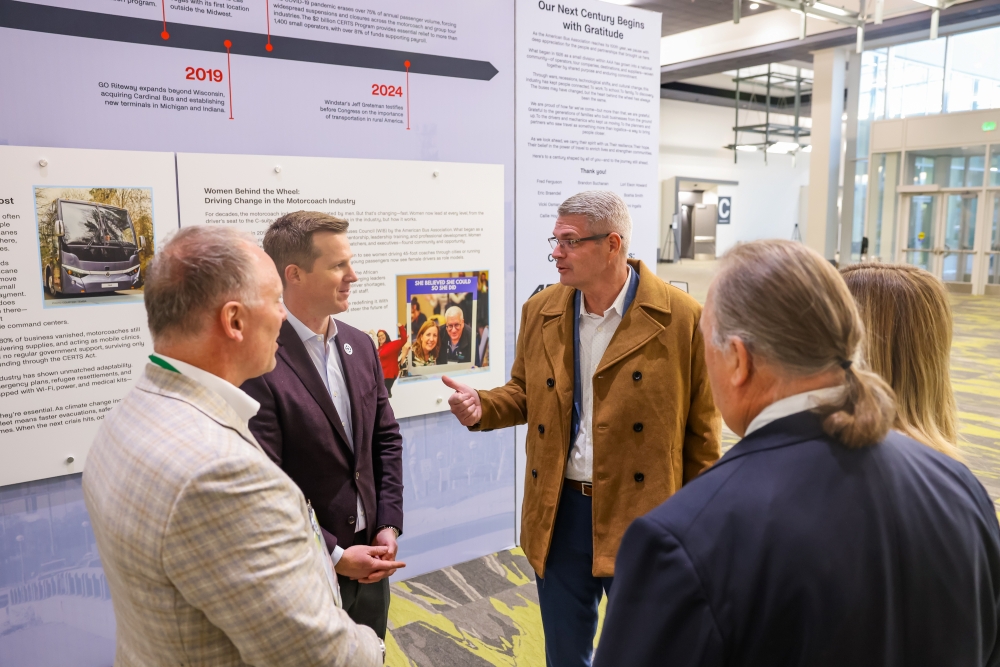
Barrs used the conversation to address a recurring public perception challenge: why rulemaking takes time and why speed is not the only measure of seriousness.
“One area that the public doesn’t likely have a working knowledge about is the rulemaking process,” he said. “From the outside, it can seem slow or overly complex, but there is real nuance involved. Developing rules that are effective, legally sound, data-driven, and durable takes time. These rules affect safety, livelihoods, and an entire industry.”
That point tends to land sharply for passenger carriers, where regulatory changes can ripple through scheduling, equipment decisions, contracting practices, and driver management—often with less flexibility than freight operations have to absorb disruption.
Barrs also aimed his answer at internal capacity and professional commitment, noting that agency staff are frequently discussed only through the lens of enforcement.
“I also want more people to understand just how dedicated the FMCSA workforce is,” he said. “Our agency is made up of public servants who are deeply committed to making roadways safer for everyone. They understand the mission and help to save lives.”
He then addressed a frequent talking point—whether every staff member has held a CDL—by reframing it as a strength, noting that it reflects a mix of expertise needed to run a modern safety agency.
“There is sometimes a narrow focus on whether every FMCSA employee holds or has ever held a CDL,” Barrs said. “The reality is many do, many have, and many have not. And that diversity of experience is a strength. We need researchers, program managers, investigators, inspectors, communications professionals, lawyers, budget analysts, and many other skillsets working together to make this agency function effectively for the American people.”
For ABA members, the practical implication is that constructive engagement often works best when it accounts for that range—technical questions, operational realities, legal constraints, data quality, and the pace at which durable rules can be built.
What he wants from ABA and motorcoach operators: earlier engagement, clearer lanes
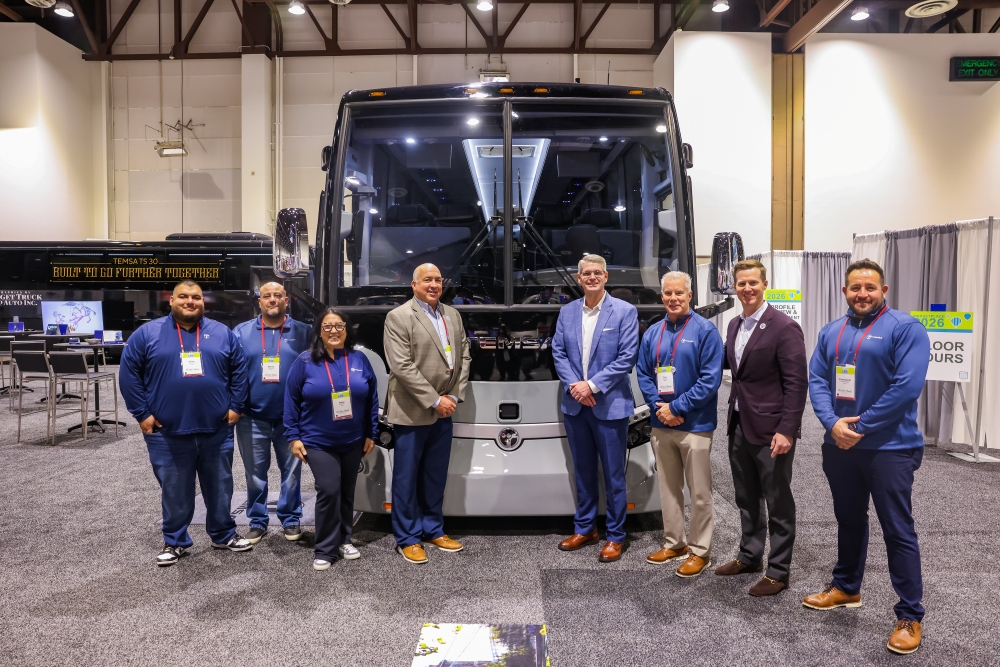
Barrs’ collaboration message centered on access and specificity—making it easier for industry to be heard and asking industry to show up early with the kind of information that can shape workable outcomes.
“My goal is to make FMCSA more accessible to the industry,” he said. “Effective collaboration starts with widening the lanes of communication so we can fully understand your concerns, shared priorities, and where our equities align.”
He described “constructive engagement” in practical terms that align with how ABA members already operate: bring the operational reality, bring the data, and focus on solutions that can be implemented. “Constructive engagement means coming to the table early, sharing data and real-world experience, and working with us to identify practical solutions to the industry’s most pressing challenges,” Barrs said.
He also emphasized the value of recognizing operators and associations that set the standards, something ABA members often argue is essential to strengthening safety culture across the sector. “We also want to recognize associations and companies that are doing it right,” he said. “We want to recognize and amplify best practices, especially when it comes to safety. This benefits the entire industry and reinforces a culture of responsibility and professionalism.”
For passenger carriers, that approach has a clear upside: when best practices are surfaced and reinforced, it can help shift attention toward the behaviors and systems that prevent incidents—rather than treating compliance as a box-checking exercise.
First-day impressions: starting with people, mission, and practical decision-making
Asked what stood out immediately when he walked through the door, Barrs pointed first to the workforce.
“My first day was spent getting to know the people who make up the Federal Motor Carrier Safety Administration,” he said. “They are truly the agency’s greatest asset, and I wanted to begin by hearing directly from them.”
What he heard, he said, reinforced his view of the agency’s internal focus. “What stood out immediately was the depth of expertise and the genuine commitment to the mission,” Barrs said. “There is a strong sense of purpose across the organization, and that reinforced for me that I stepped into the right role at the right time.”
He also described the job’s responsibility in practical terms—what it means to lead an agency whose decisions touch roadway safety every day.
“As I entered this role, I was also keenly aware of the responsibility that comes with it,” he said. “The work we do impacts safety on America’s roadways every day, and that responsibility guides how I approach leadership. My focus is on listening, collaborating, and ensuring FMCSA continues to make fair, practical, and safety-driven decisions while engaging closely with our partners across the transportation community.”
Consistency, safety, and engagement
Throughout the conversation, Barrs’ message remained consistent: safety outcomes come first, but the agency’s work must be communicated clearly, grounded in real operations, and implemented through systems that reward compliance and professionalism. He is signaling a desire to deepen engagement with motorcoach operators, and his stated approach—communication, outreach, education, and targeted enforcement—aligns with where passenger carriers most need predictability and practical support.
For ABA members, the opportunity is straightforward. Bring issues forward early. Bring operational detail and data, not just frustration. Highlight what works in the passenger carrier space and where one-size-fits-all assumptions create friction. Barrs’ emphasis on accessibility and best-practice recognition suggests he wants that kind of dialogue—and intends to use it to shape decisions that are both safety-driven and workable in the real world.