Courtesy Isn’t Optional: A Reminder About Service, Perspective, and Grace
A Service Lesson from an Airline Cabin That Applies Everywhere
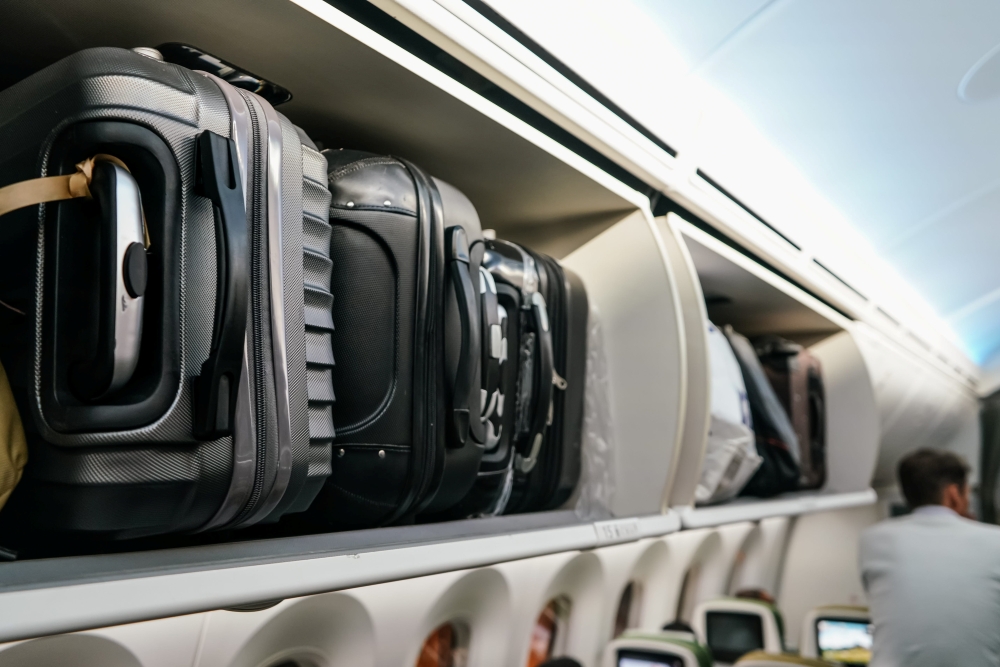
I was on a flight recently when I overheard a conversation that made me wince.
The aircraft door had closed, and the crew was preparing for pushback. A flight attendant stopped near my seat to close an overhead bin and noticed that one of the bags was turned on its side. She asked those seated nearby whose bag it was. No one responded. She then spoke—loudly, and with a noticeable edge—to no one in particular, stating that all bags must be laid flat in the overhead bins.
A second attendant walked up and added, “I’ve made four announcements since boarding began.”
If you fly often, you probably know this rule. And if English is your first language, you were on the plane and paying attention when the announcements were made, then sure, you wouldn’t have much of an excuse.
But if one or more of those conditions weren’t met, then perhaps you didn’t know.
Hard to believe? Maybe. Possible? Absolutely.
Despite the obvious frustration—something I’m sure these attendants encounter on nearly every flight—the tone landed poorly. It happened in plain earshot of dozens of passengers. And this wasn’t a small regional carrier, either. This was the top airline, as ranked by Forbes in 2025.
What made the moment even more interesting was what happened on my return flight.
On that flight—on the same airline, just a different aircraft—I was actually instructed to place my carry-on on its side. Apparently, some of the newer planes are designed to accommodate bags positioned that way.
Same airline. Different plane. Different instruction.
Which means even the airline itself isn’t consistent here—and if that’s known by the attendants, it should naturally influence a higher degree of tolerance.
I also paid attention as we disembarked the aircraft and noticed that the passenger who retrieved the bag in question was wearing headphones. It’s entirely possible she didn’t hear the announcements—or even the flight attendant asking whose bag it was in the first place.
Familiarity Breeds Blind Spots
I get it.
After years of working at Disney—transporting guests to and from the property and welcoming them into the parks—it often felt like guests packed everything except their brains. We heard questions like, “When’s the 3:00 parade?” We witnessed behavior that made little sense to those of us who lived and breathed the environment every day.
But here’s the thing: we were comfortable because it was familiar.
Take me out of my element, drop me into an unfamiliar city, put me behind the wheel looking for parking or a destination, and suddenly I’m the one doing nonsensical things and asking obvious questions. In fact, the fastest way for my wife and me to argue while traveling is for me to be lost. My frustration rises, my responses shorten and sharpen—and that always makes for a great experience for everyone else.
Sound familiar?
Customers Are Guests—By Choice
That’s why moments like this matter.
Yes, service roles are demanding. Yes, repetition wears you down. Yes, some rules feel painfully obvious. But customers are still guests who choose to patronize us.
There are other airlines that fly where I’m going, just as there are countless alternatives for nearly every service we choose to buy. Courtesy isn’t optional; it’s the baseline.
Education delivered with respect lands very differently from education delivered with snark.
For the record, I wasn’t flying first class. If I were, I would expect an even higher level of service—and definitely more tolerance. But regardless of seat location, the expectation of professionalism remains the same.
And that raises a bigger question: shouldn’t we, as patrons, expect what used to be called common courtesy?
When did courtesy become commoditized? When did basic professionalism, respect, and tone turn into something we’re expected to upgrade into—or excuse the absence of because someone is busy, stressed, or enforcing a rule?
Courtesy isn’t a premium feature. It’s not reserved for first class, VIP status, or loyalty tiers. It’s foundational. And when it’s missing, no amount of policy explanation can make up for it.
What Disney Taught Me About Service (And Why It Still Matters)
During my time at Disney, educating guests was part of the job—every single day. Guest service wasn’t left to interpretation or mood. It was grounded in simple, repeatable guidelines that applied whether you were having the best day of your career—or the most exhausting.
We taught cast members to:
- Make eye contact and smile
- Greet and welcome each and every guest
- Seek out guest contact rather than avoid it
- Provide immediate service recovery when something goes wrong
- Always display appropriate body language
- Preserve the magical guest experience
- Thank each and every guest
None of these were complicated. None required extra time. But all of them required intention.
We used to say, “We’ll teach you our guidelines for guest service, and we hope you’ll use them always—voluntarily.”
But there was an unspoken second part.
At the end of the day, courtesy isn’t optional. It’s the job.
Policies matter. Procedures matter. Safety matters. But none of those excuses, tone, posture, or attitude, make a guest feel dismissed or embarrassed. In fact, when rules vary, environments change, or expectations aren’t crystal clear—that’s precisely when professionalism and grace matter most.
And when all else fails, remember this:
You get paid to smile.
Including the smile in your voice.
Because guests may forget the rule you were enforcing—but they will never forget how you made them feel.

Brian Dickson is the owner of Bus Business Consultants and author of Ground Transportation Insights on Substack. Drawing on leadership roles in motorcoach operations and Disney’s Guest Transportation, he helps operators improve performance, culture, and growth—Bus Business Consultants: Driving Performance, Culture, & Growth in Ground Transportation.
This article was originally published on Feb. 6, 2026 at Ground Transportation Insights.
The views expressed are those of the author alone and do not necessarily reflect the position of the American Bus Association.