Building Connections at Mount Vernon
Lego artist Joshua Hamilton offers groups a fun, family-friendly way to experience George Washington’s estate—just in time for America250
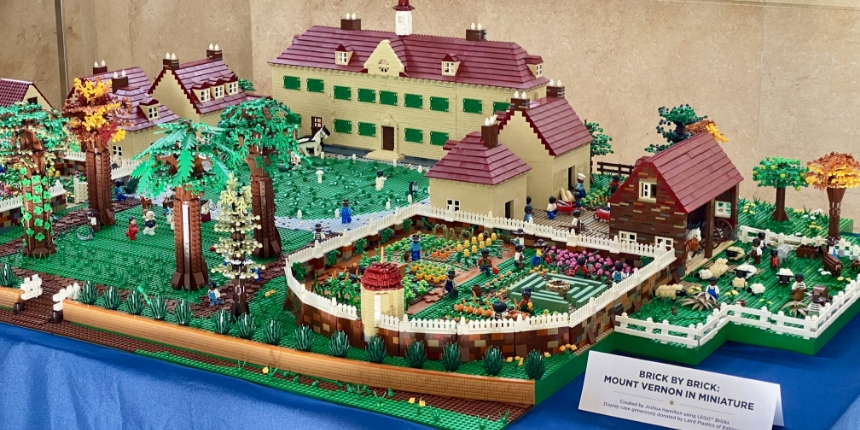
As celebrations kick off for America’s 250th anniversary, groups are discovering fresh and creative ways to connect with the nation’s founding story. At George Washington’s Mount Vernon in Northern Virginia, one exhibit is doing just that—capturing imaginations and sparking curiosity in travelers of all ages.
“Brick by Brick: Mount Vernon in Lego Form” is a remarkably detailed miniature replica of the historic estate made entirely of Lego bricks. Displayed in the Donald W. Reynolds Museum and Education Center, the intricate creation by Northern Virginia resident and Lego artist Joshua Hamilton has quickly become a popular attraction for groups and families visiting Mount Vernon.
“Joshua Hamilton has been part of the Mount Vernon community for years, and we have long been interested in bringing his ever-expanding Lego model to the estate,” says Lauren Herba, media and communications coordinator at Mount Vernon. “As Mount Vernon continues to develop programming for America’s Semiquincentennial, Joshua kindly offered to loan his display. Safely enclosed in a custom-built protective case donated by Laird Plastics of Baltimore, the exhibit is strategically located in the Museum and Education Center so guests can compare the Lego version to the historic buildings they’ve explored that day.”
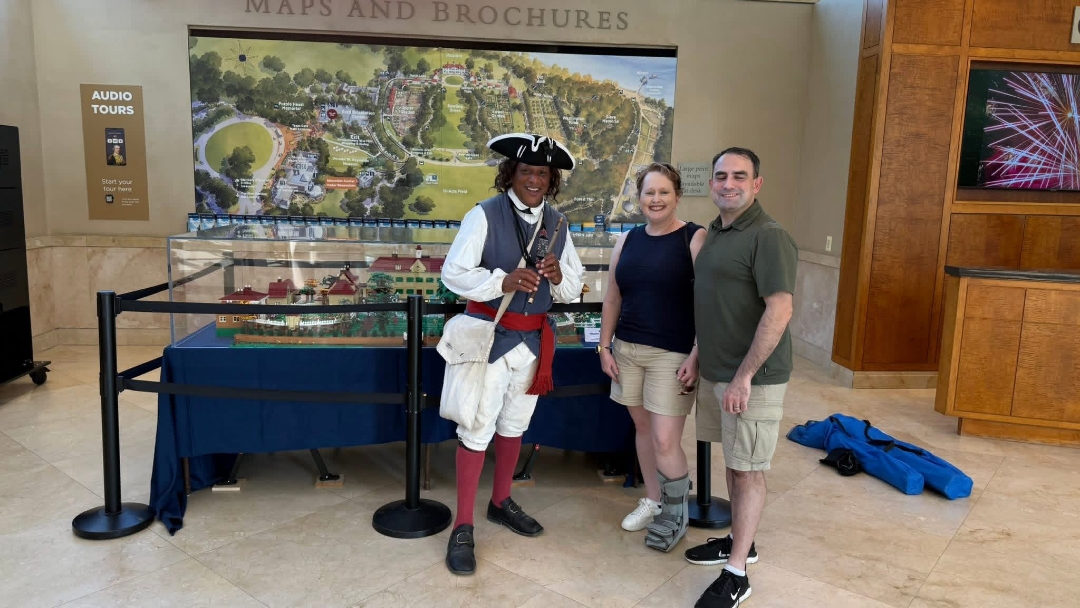
Joshua and Rachel Hamilton at Mount Vernon with their friend Donald Francisco. Donald works as a Costumed Interpreter at Mount Vernon. There is a mini-figure of Donald in the Mount Vernon Lego display.
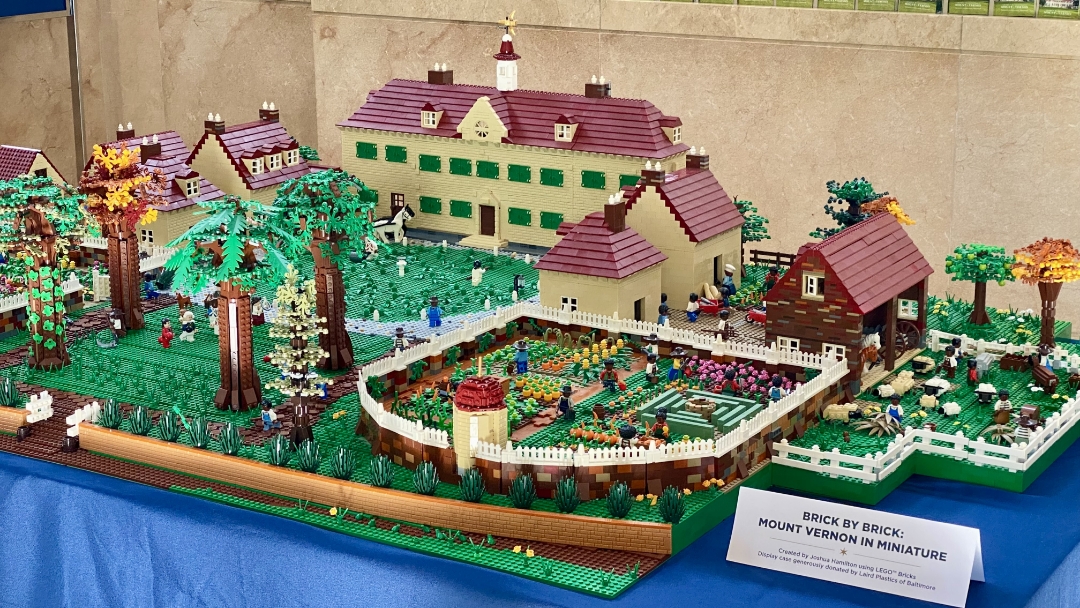
As America celebrates 250 years of independence, Mount Vernon offers countless ways to connect with the nation’s founding story. And now, with the addition of Joshua Hamilton’s Lego masterpiece, visitors can see that story—brick by tiny brick.
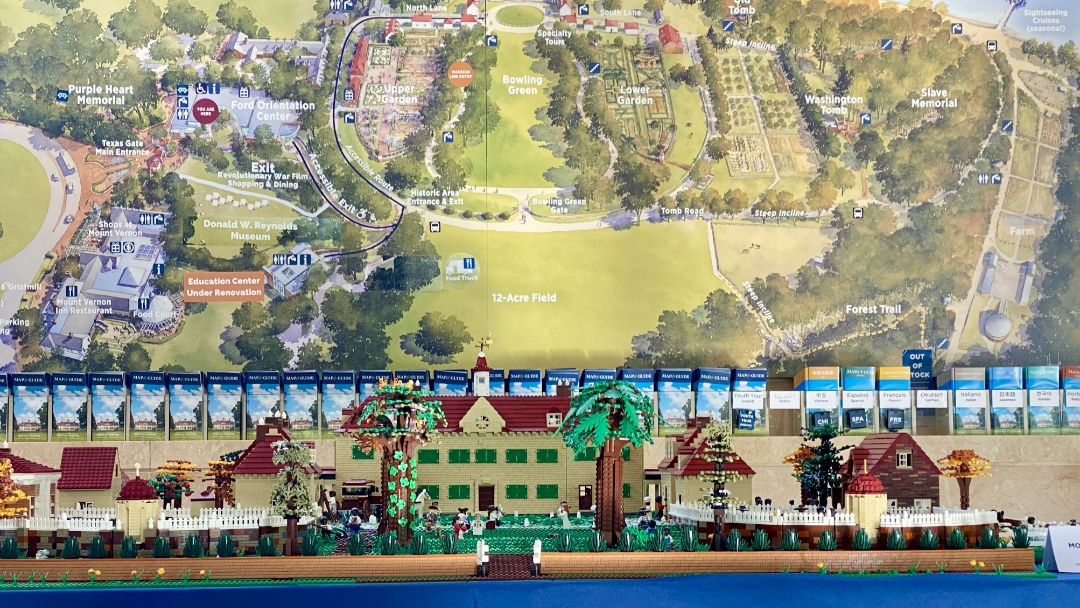
Joshua Hamilton’s creation invites comparisons between the full-scale estate and his miniature version, which is located in the Museum and Education Center.
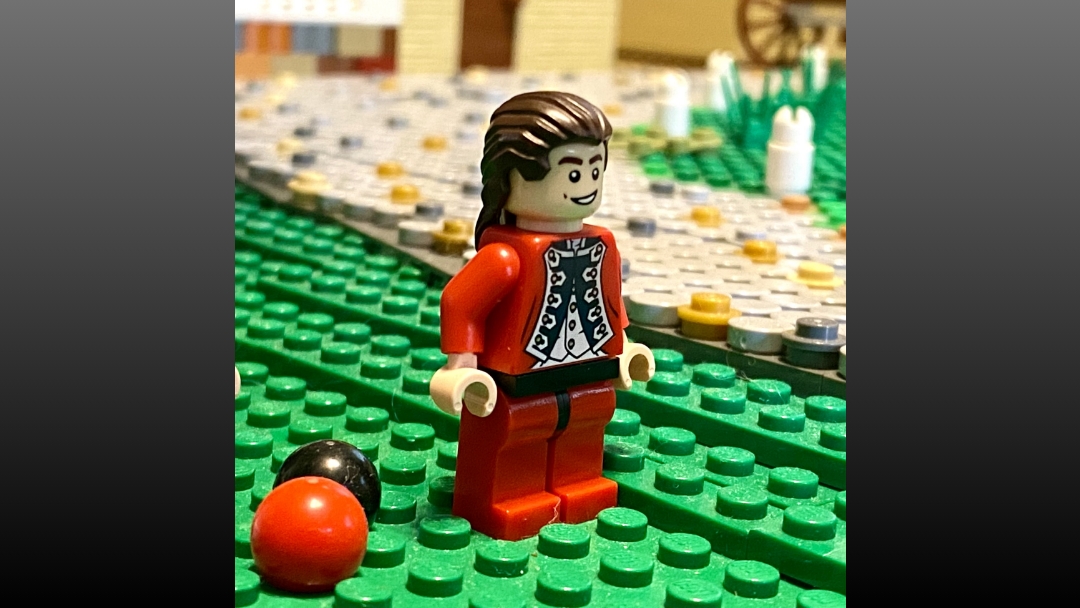
A guest enjoys a game of bocce on the Bowling Green as young ladies nearby play the 18th-century Game of Graces.
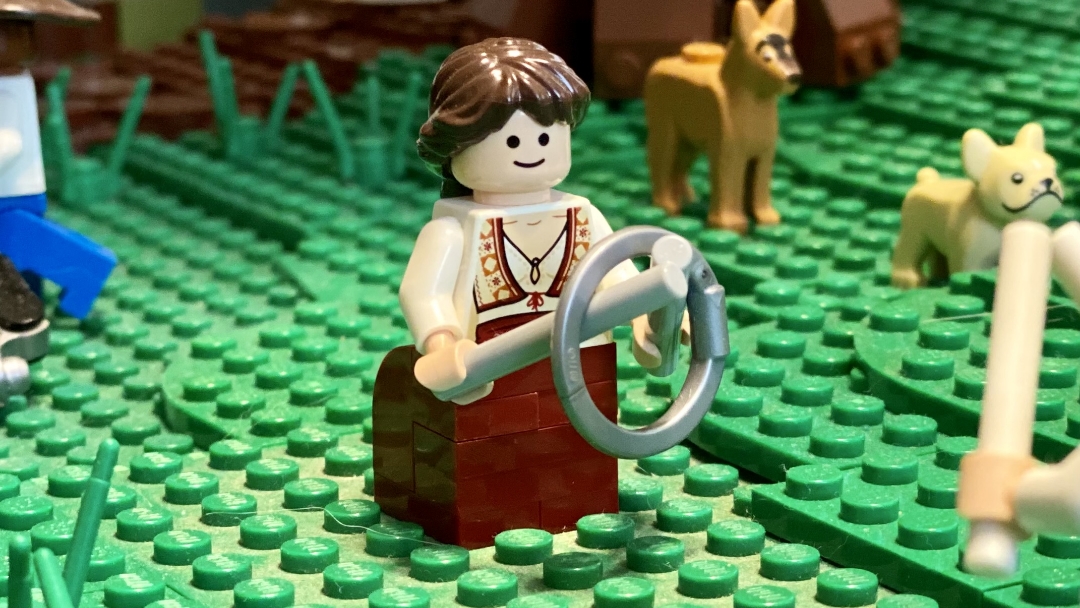
A guest enjoys a game of bocce on the Bowling Green as young ladies nearby play the 18th-century Game of Graces.

A Lego figure of Sambo Anderson, an enslaved carpenter born in West Africa, walks near the blacksmith shop. Look close and you’ll see the brick with tattoos.
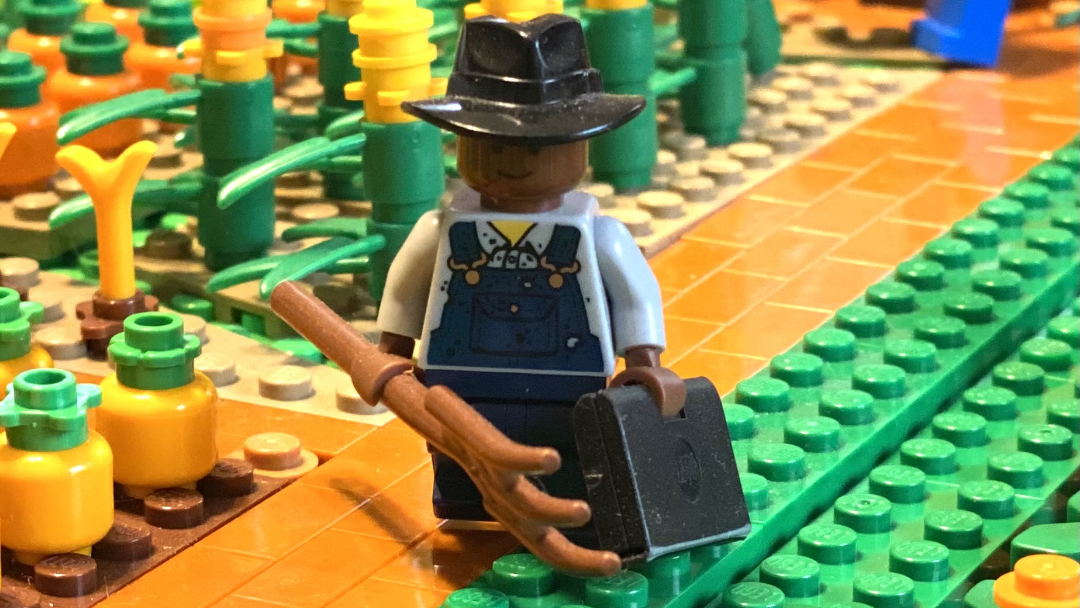
In the lower garden, Caesar, an enslaved preacher and literate worker, holds a book symbolizing his faith and learning.
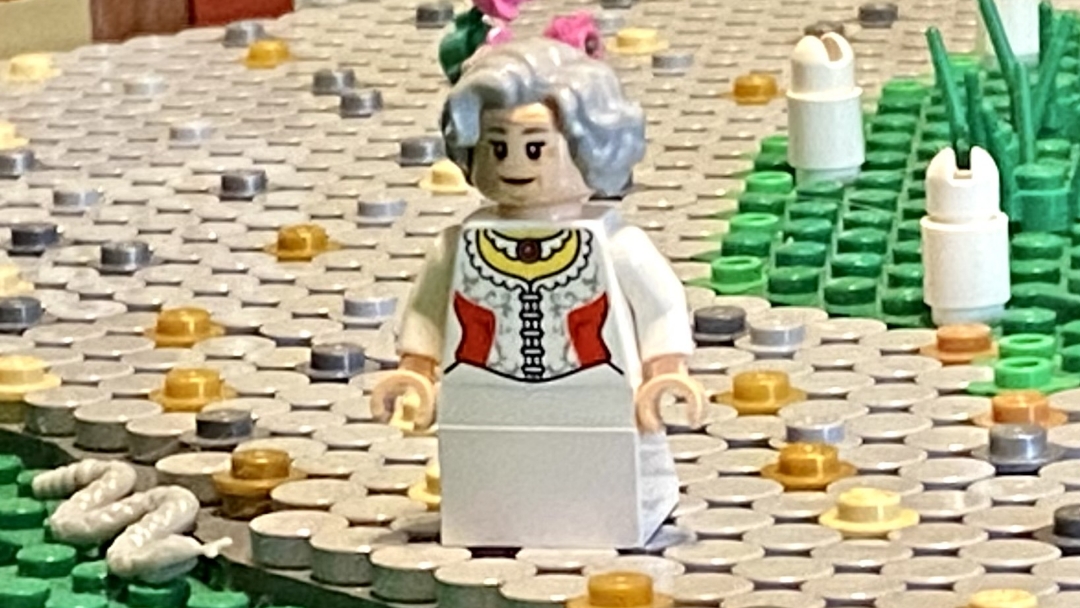
Visitors delight in spotting familiar features among the Lego figures, such as Martha Washington (shown here).
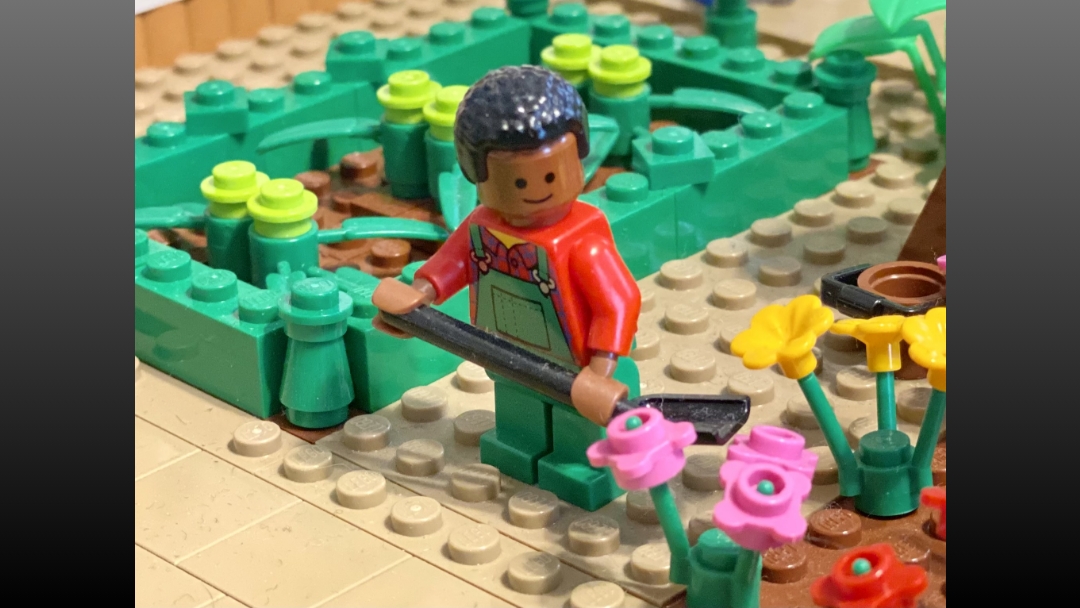
Hamilton’s Mount Vernon in Lego form is a living snapshot of the estate’s history. Each miniature figure and building tells part of the story of the people who lived and worked there.
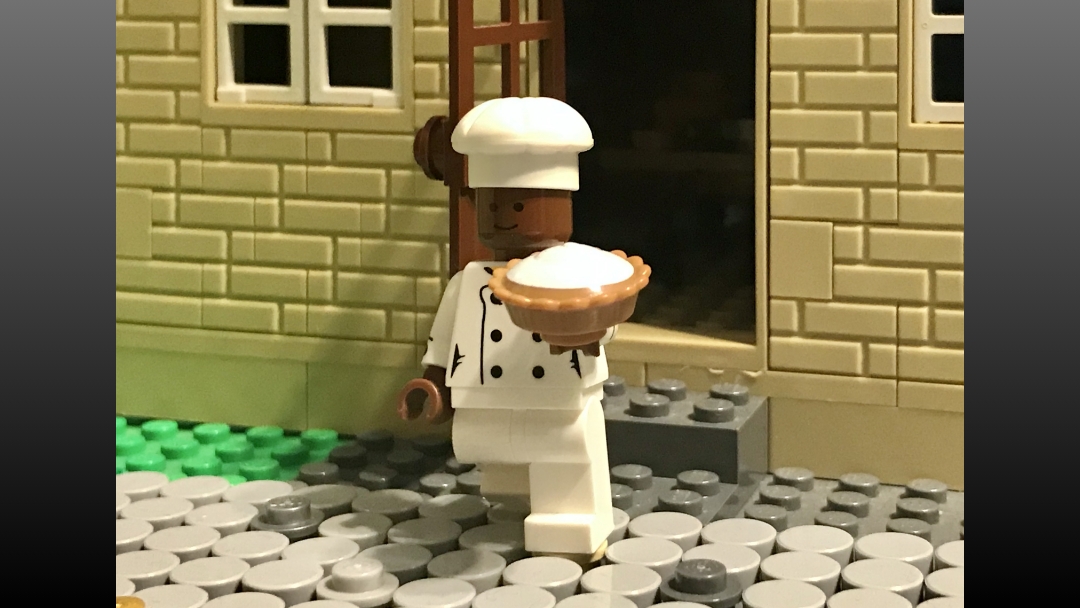
Hamilton’s Mount Vernon in Lego form is a living snapshot of the estate’s history. Each miniature figure and building tells part of the story of the people who lived and worked there.
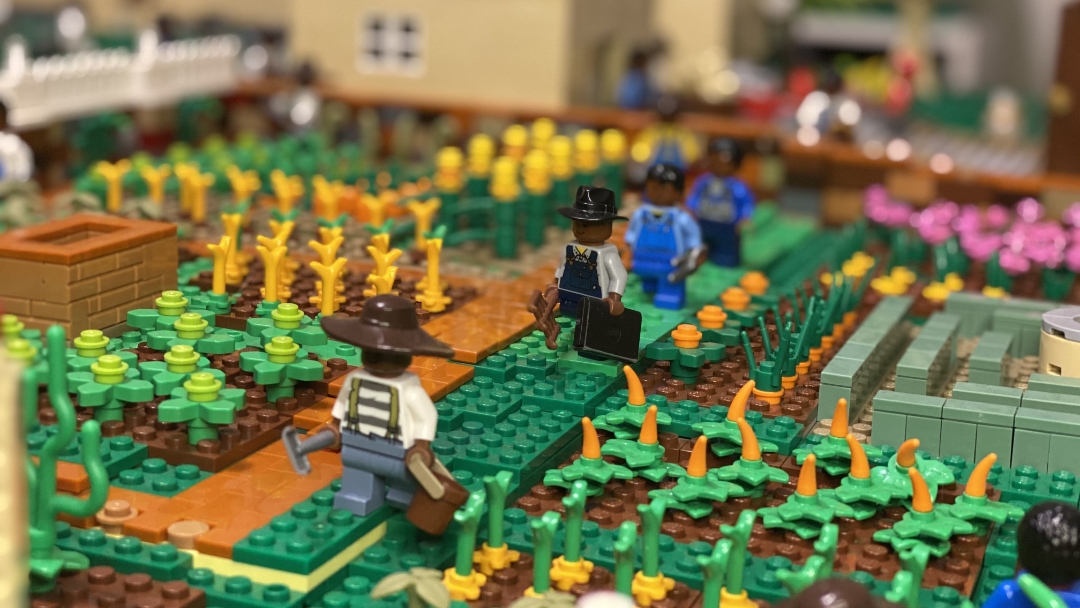
“It’s both relaxing and challenging,” Hamilton says of his Lego builds. “For me, it’s about creativity, problem solving, and storytelling. And there’s a great sense of community in the Lego world—everyone learns from each other.”
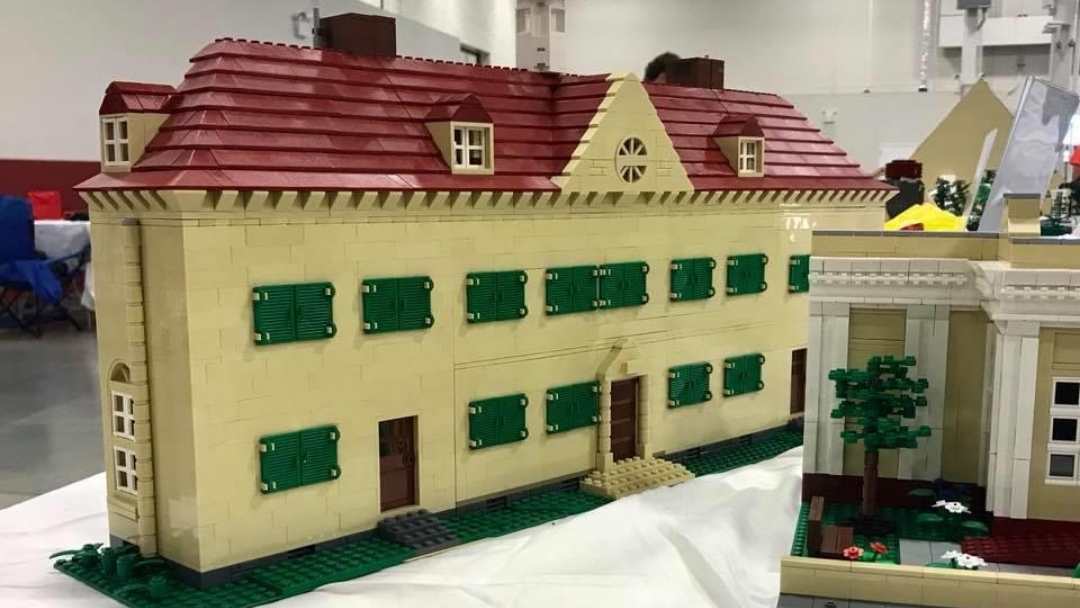
Early versions of the Lego Mount Vernon show the Mansion alone in 2018, followed by added buildings and gardens in 2019.
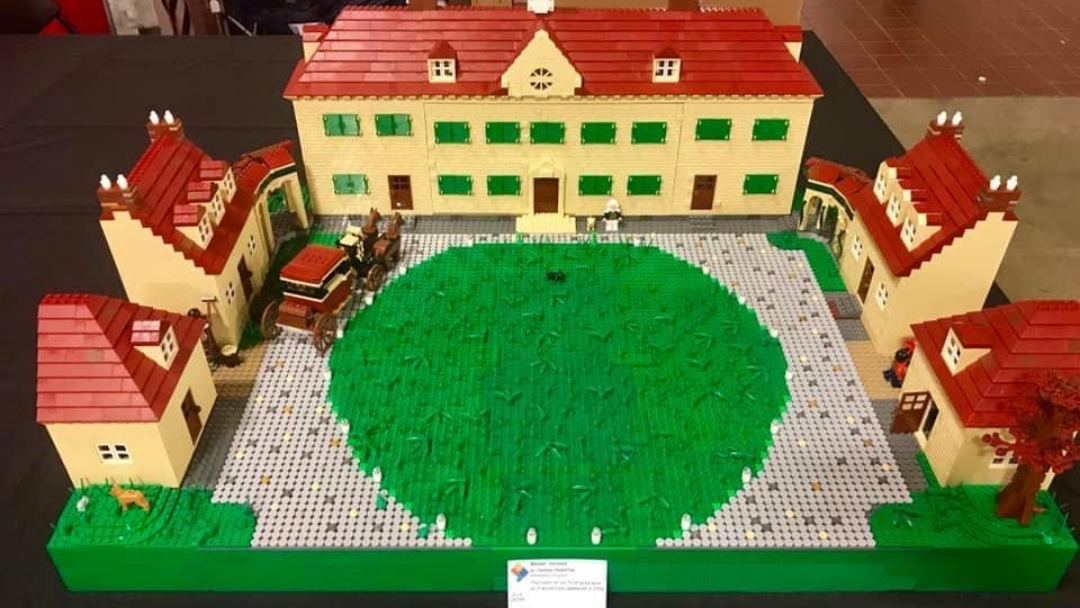
Early versions of the Lego Mount Vernon show the Mansion alone in 2018, followed by added buildings and gardens in 2019.
A Builder With a Mission
Hamilton, a retired U.S. Army veteran originally from Louisiana, lives just 5 miles from Mount Vernon with his wife, Rachel, and their three grown children. His connection to the historic estate runs deep: Rachel once worked there as a historical interpreter, and their son, Andrew, performed alongside Donald Francisco, a retired U.S. Army Band musician who works as a costumed interpreter at Mount Vernon. Their family visits to Mount Vernon inspired Hamilton to transform his love of making Lego builds into something uniquely educational. “The more time I spent there, seeing the architecture of the buildings and learning about the people who lived and worked there, I thought, ‘What would this look like in Lego?’” he says.
What began in 2017 as a small model of the Mansion has grown to encompass the Mansion, gardens, outbuildings, and dozens of scenes depicting daily life at Mount Vernon in 1799. Today, the model stretches nearly 8 feet wide by 5 feet deep and consists of 12 modular sections that can be separated for transport—a necessity when dealing with tens of thousands of Lego pieces. “People think of Lego as lightweight,” he laughs. “But once you’ve got that many parts together, it’s surprisingly heavy.”
From Family Hobby to Historical Masterpiece
Hamilton’s passion for Lego began more than a decade ago while helping his children assemble their Star Wars, Friends,and Disney Princess sets. When the kids outgrew the hobby, he kept going—even building his own “MOCs,” or “My Own Creations,” a Lego term for original designs created by Lego fans beyond standard sets.
He’s now a proud member of the Northern Virginia Lego User Group (NOVA-LUG), a hobby club of adult builders who collaborate on individual and large-scale group projects for maker shows, conventions, museums, and more. “The wonderful thing about Lego is it’s never finished,” Hamilton explains. “You can always take it apart, add something new, or make it better. Every build teaches you something.”
“We are thankful to Joshua Hamilton for allowing us to display his incredible art on the estate.”
—Julie Almacy, vice president of media and communications, George Washington’s Mount Vernon
That mindset shaped his evolving Mount Vernon project, with every window, column, and garden path carefully studied to mirror Washington’s estate as it appeared more than two centuries ago. Hamilton credits his wife for her historical insights and “quality control,” ensuring authenticity down to the tiniest detail.
Books such as Jessie MacLeod’s Lives Bound Together: Slavery at George Washington’s Mount Vernon also deeply influenced his approach. “As I researched Mount Vernon, I realized leaving out the more than 300 enslaved people who lived and worked there would be a glaring omission,” says Hamilton. “They were an essential part of the estate’s history and deserve to have their stories told.”
Capturing Life at Mount Vernon
Many figures in Hamilton’s display, including the enslaved people, are based on real individuals.
Visitors can spot Frank and William Lee, enslaved butlers tending the carriage circle with historically accurate tools—a scythe and stone roller recreated from museum examples. In the Bowling Green, George Washington enjoys a game of bocce, while nearby young ladies play the “Game of Graces,” a popular 18th-century pastime.
Hamilton even included lesser-known figures, like Sambo Anderson, an enslaved carpenter originally from West Africa, recognizable by his distinctive facial tattoos, and Caesar, a literate preacher who ministered to the enslaved community at Mount Vernon. On the mansion’s roof, lightning rods—suggested by Benjamin Franklin—gleam in gray Lego pieces, while a tiny sundial in the carriage circle features an inventive touch: a Lego ice skate for the sundial’s blade.
“I wanted to represent history as it really was,” says Hamilton, “the parts we celebrate and the ones that challenge us.”
Lego as Art
Hamilton’s project also highlights the broader world of Lego artistry. Adult Fans of Lego (known as AFOLs) around the globe push the limits of design, using advanced techniques and thousands of pieces to recreate everything from starships to historic landmarks. Through NOVA-LUG, he continues exploring new ventures, including a collaboration honoring the National Park Service’s 100th anniversary. Other public displays include a Wicked-themed Palace of Oz built for The Darcy Hotel in Washington, D.C., and a massive “G.I. Joe: Battle of Cobra Island” exhibit that thrilled nostalgic fans at BrickFair Virginia. Next up: science fiction builds inspired by Starship Troopers and Aliens: Colonial Marines.
“There’s always something new to try,” he says. “That’s the fun of it—you’re never done learning or building.”
Legos as Education
“At Mount Vernon, we recognize that people connect with history differently,” says Julie Almacy, vice president of media and communications. “Joshua Hamilton’s display is a creative and accessible way for visitors of all ages to explore George Washington’s life and legacy, complementing our traditional exhibits and inspiring new ways to engage with the past.”
For Hamilton, the most rewarding part of the Mount Vernon project is contributing to the storytelling of America’s past. “Mount Vernon presents George Washington’s legacy in full, showing both his leadership and the reality that he owned enslaved people,” he says. “That’s what makes Mount Vernon so powerful. If my Lego display can help visitors see that story in a new way or spark a child’s imagination, then it’s worth every hour I spent building it.”
To view Hamilton’s other Lego projects or connect with him for technique questions, visit @batbrick39 on Instagram or YouTube.
To learn more about George Washington’s Mount Vernon, visit mountvernon.org or call (703) 799-8688.
Pamela Brossman is the senior editor of ABA’s Destinations magazine.
Photo credit: Joshua Hamilton.
Discover what’s new at George Washington’s Mount Vernon in the January/February issue of Destinations magazine. The Tour Stop feature, “Restored and Ready for the Future, Mount Vernon Tells America’s Story in Fresh Ways,” highlights the estate’s exciting revitalization updates, interactive exhibits, and immersive group experiences—ready just in time for America’s 250th anniversary.