5 Questions with ABA: Crystal Williams on Safety, Education, and Supporting the Full Group Travel Industry
ABA's newest team member is a former federal employee now focused on partnership, responsiveness, and member service.
In 2024, motorcoach travel in the United States generated $158.0 billion in total economic impact and supported 890,031 jobs. That full picture includes both group travel and scheduled service, a reminder that the bus industry’s reach extends across tourism, mobility, workforce access, and communities nationwide.
Within that broader total, the group travel side alone, including charter, group tour, and sightseeing activities, generated $89.3 billion in total economic impact and supported 515,909 jobs in 2024. Scheduled service accounted for another $69.8 billion and 370,000 jobs. Taken together, the numbers tell an important story: group travel is not a niche segment of the industry. It is a major economic driver and central to ABA’s mission of connecting bus operators, tour professionals, and travel partners in a shared ecosystem.
That is part of what makes Crystal Williams’ arrival at ABA so important.
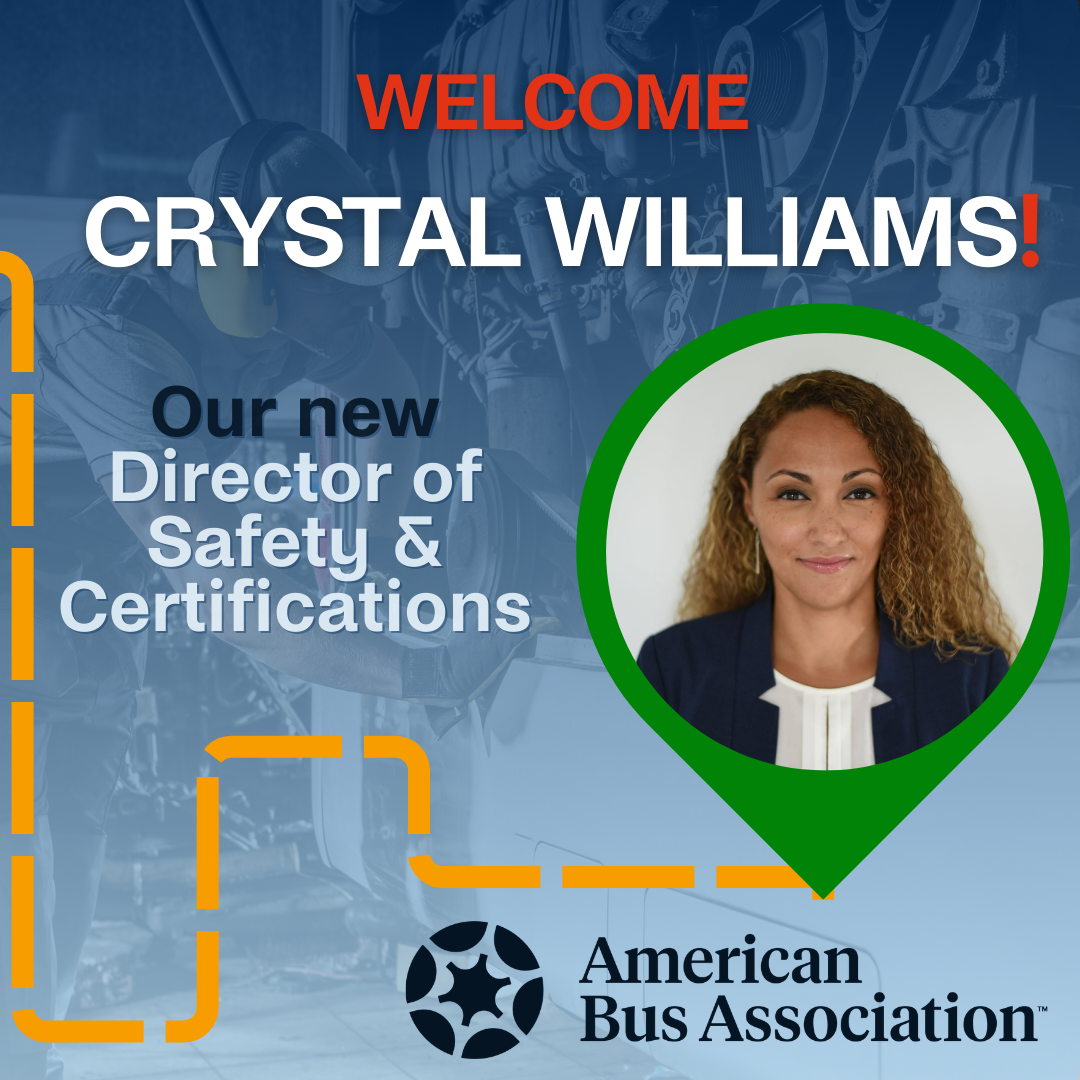
As ABA’s new Director of Safety and Certifications, Williams steps into a role that touches not only bus operators but also the broader group travel marketplace that depends on strong standards, trusted partnerships, and practical member education. Safety may be the most visible part of the title, but the work is bigger than compliance alone. It is also about helping members better understand risk, operations, expectations, and best practices, thereby strengthening service across the industry.
For bus operators, that means practical guidance, clearer tools, and education that supports daily operations. For tour operators and other group travel members, it means stronger alignment with transportation partners and a better shared understanding of what safe, reliable, well-executed group travel requires. ABA’s strategic materials have long emphasized serving the full motorcoach, tour, and travel industry, while also improving how the association communicates best practices, trends, and operational value across those segments.
Williams brings a perspective shaped by years of supporting the industry from the federal side. Now she is moving into a role focused on partnership, responsiveness, and member service. We asked her five questions so ABA members can get to know her and hear, in her own words, how she is thinking about the work ahead.
What excites you most about joining ABA and stepping into this role?
The answer starts with the opportunity to serve the industry more directly.
“What drew me to ABA is the opportunity to work directly with an industry I’ve supported for years from the federal side,” she said. “This role allows me to shift from regulator to partner – helping members navigate safety and compliance in a way that is practical, forward-looking, and grounded in real-world operations. With so many things changing in the industry right now, there is a real opportunity to bring clarity and structure to what can often feel complex or burdensome.”
That answer resonates because ABA’s membership is deeply interconnected. The motorcoach operator may be the one behind the wheel, but the success of group travel depends on much more than vehicle movement alone. It depends on coordination between operators, tour planners, destinations, and partners across the travel experience. Education plays a critical role in that ecosystem. It helps members understand not only what is required, but also how strong operations, clear communication, and shared expectations contribute to safer, better travel.
That is why Williams’ role should matter to tour operators as much as it does to carriers. Group travel works best when everyone involved understands the standards behind the experience.
What is your early vision for the role?
Williams said her first priority is simple: listen.
“One of my top priorities early on is listening,” she said. “I want to understand the needs of the bus and tourism industry and get a clear picture of the day-to-day challenges members are facing. That insight will directly shape how I approach developing tools, resources, and support that are both practical and responsive to their real-world operations.”
That answer is especially important because it opens the door to a broader view of education.
For some members, education may mean understanding safety expectations, certifications, or evolving compliance responsibilities. For others—especially on the group travel and tour side—it may mean gaining a stronger understanding of operational realities, strengthening trip planning through better-informed partnerships, and building more confidence in the standards and practices that support safe travel delivery.
ABA’s prior strategic planning documents point in exactly that direction. They emphasize operational education, best-practice communication, and stronger outreach to the bus, tour, and travel industry. They also specifically recognize the importance of helping members understand how tour operations and travel services fit into the broader value proposition of a bus company and of ABA membership itself.
That broader educational role matters because the economic footprint of group travel is so large. The report commissioned by ABA found that motorcoach group travel alone generated $39.8 billion in direct business sales, which translated into $89.3 billion in total economic impact across the U.S. economy.
What is one part of this work the public may not fully understand?
“Safety,” she said. “People outside the bus industry might not immediately think of safety as a core focus for an association – but it truly is. Prioritizing safety isn’t just the right thing to do; it’s also essential for strong, sustainable business operations. As I move forward in this role, I feel fortunate that while ‘safety’ is in my title, it is also central to so much of what ABA represents and supports.”
That point comes into even sharper focus when viewed through the group travel lens. Safety is not just an internal operator matter. It is part of the industry’s promise to planners, passengers, destinations, and clients. It supports confidence. It supports business continuity. It supports reputation. And when paired with education, it helps create a common understanding across the different parts of the ABA community that contribute to a successful trip.
That is why Crystal’s role should not be read narrowly. This is not only about compliance support. It is also about strengthening the connective tissue between operators and travel partners through better information, stronger tools, and more practical learning.
What does effective collaboration with members look like?
“The most effective collaboration comes from open, early, and candid communication,” she said. “When members share what they are seeing on the ground – whether it’s challenges with implementation, system issues, or emerging concerns – it allows us to better tailor guidance and advocate more effectively. If we’re communicating early and honestly, the tools and products we build will actually reflect what members need and how they operate.”
That philosophy is especially relevant to ABA because challenges rarely remain confined to a single segment of the membership. An issue that begins as an operational concern for an operator can quickly affect itinerary design, client communication, partner expectations, and trip execution on the tour side. Better communication across the membership leads to better resources—and better resources lead to a stronger industry.
In that sense, education is not just about training. It is also about translation. It helps one part of the industry better understand another, which improves coordination and ultimately strengthens the member experience ABA is trying to deliver.
What was your first impression of ABA?
Her first week told her a lot about the Association’s members and staff.
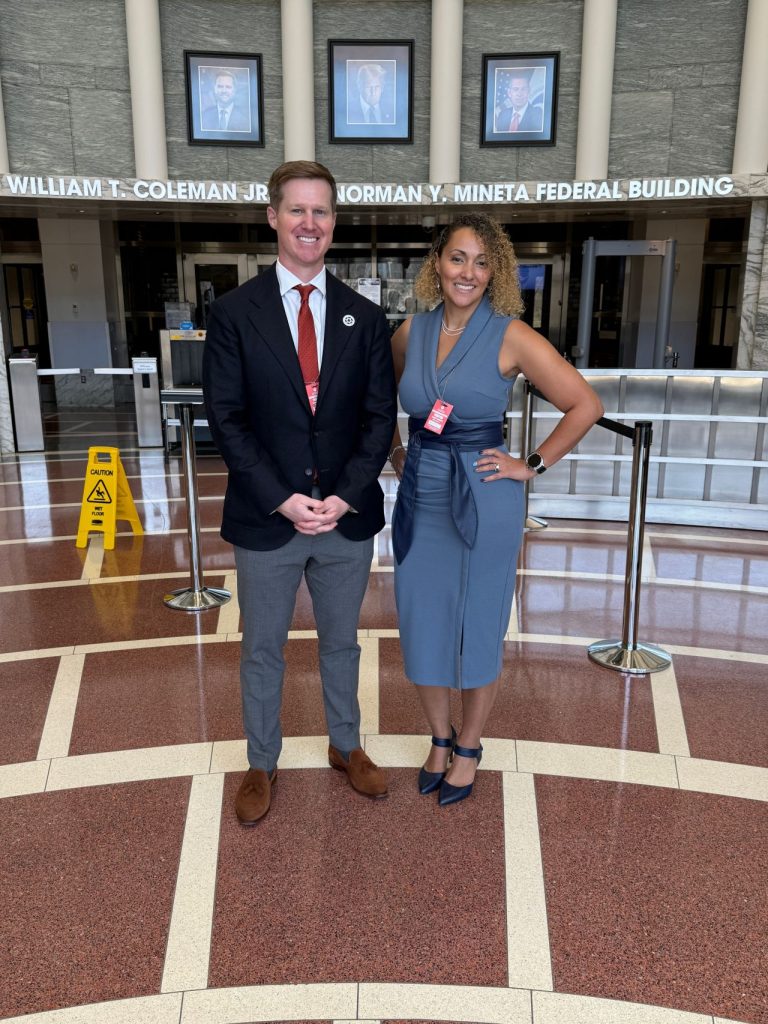
“Totally by accident, my first week was the week of one of ABA’s member fly-ins,” she said. “Needless to say, it was a fast-paced, busy start. Despite that, the team seemed unfazed. Everyone was clearly busy, but it never felt chaotic—just focused and well-executed. I could tell right away that this group does big things without breaking a sweat. If I wasn’t sure I was in the right place before, I definitely was at that point.”
That first impression feels fitting for an association whose work spans advocacy, communications, member engagement, business connections, and operational support across the bus and group travel industry.
For ABA members, the takeaway is straightforward. Crystal Williams is entering this role with a service mindset, a practical perspective, and a clear interest in listening first. And at a moment when motorcoach travel generates $158.0 billion in total economic impact—with $89.3 billion of that coming from the group travel side alone—that kind of leadership matters.
Because when group travel is this economically significant, safety and education are not side functions. They are core to ABA’s approach to helping members succeed.