Buses Move America
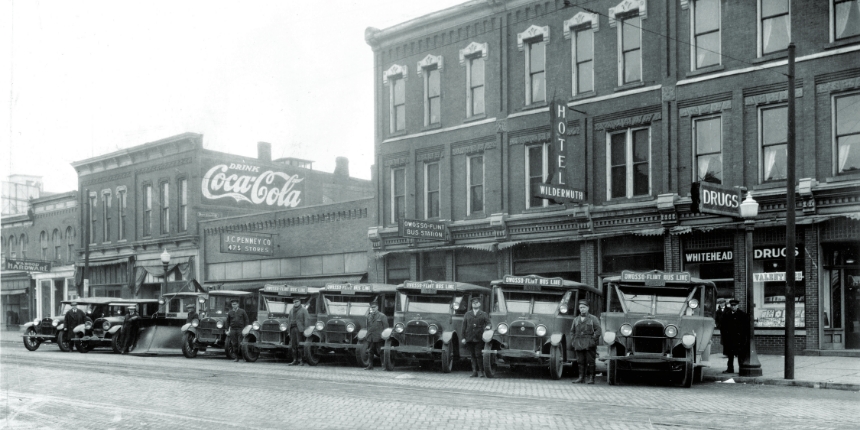
The story of the American Bus Association begins not in a corporate office or at a policy table, but on a dusty road in the 1920s, when America was still learning to drive itself. Cars were noisy novelties, highways were inconsistent at best, and airplanes were more dream than daily reality. But buses—those long, sturdy vehicles painted in local colors—were quickly becoming the link between small towns and the wider world.
In 1926, a group of independent operators gathered in Washington, D.C., to discuss their growing list of challenges. The vehicles were improving, but road conditions varied wildly from state to state. Licenses and taxes differed by jurisdiction, and there was little coordination among carriers. The group realized that to build a real transportation network, they needed to act together. That meeting marked the birth of an organized bus industry—and the earliest form of what would become the American Bus Association.

Photo Courtesy Jefferson Lines.

Photo courtesy Indian Trails.

Photo Courtesy Jefferson Lines.

Photo Courtesy Hotard Coaches Inc.

Photo Courtesy ABA.

Photo Courtesy Peter Pan Bus Lines.

Photo courtesy Temsa.

Photo courtesy Napaway Coach.

Photo courtesy ECHO AFC (Brandon Banister).
Four years later, their collaboration gained a formal identity. In 1930, the organization was chartered under the American Automobile Association as the National Association of Motor Bus Owners, or NAMBO. The purpose was ambitious but practical: to create consistent standards for safety, fairness, and reliability. NAMBO represented both the operators behind the wheel and the communities depending on them. It wasn’t just about profit—it was about public service.
Even in those early years, NAMBO had numbers on its side. A 1929 safety report proved that “the motor bus is the safest of all highway vehicles”—seven times safer than private automobiles. For an America that still measured travel in train timetables and road miles, the bus offered something new: affordable mobility for anyone. It was an equalizer on wheels.
During the Great Depression, the association helped its members survive by sharing strategies for efficiency and maintenance, encouraging cooperation over competition. That solidarity paid off when the next national crisis hit.
Discover how one little-known 1982 law turned the bus industry on its head—and set the stage for the entrepreneurial spirit that still drives it today.
World War II turned bus operators into unsung patriots. Fuel and rubber were rationed, and car ownership plummeted, but buses rolled on—moving workers to defense plants, soldiers to bases, and families to reunions. One NAMBO bulletin issued during wartime reminded members that coaches were “limited to essential operations such as transportation of the armed services, war workers, and schoolchildren.” Bus companies did more than carry passengers; they kept the American home front functioning.
After the war, prosperity—and highways—returned. President Eisenhower’s 1956 Interstate Highway Act created an entirely new landscape for travel. The freshly paved roads were tailor-made for buses, allowing them to move faster, farther, and more safely than ever before. NAMBO saw an opportunity to standardize national routes and schedules, lobbying successfully for the Uniform Time Act to synchronize travel across the country. That achievement might seem small, but it represented something enormous: the first time passengers could expect consistent, reliable service from coast to coast.
By the 1960s, buses were firmly a part of America’s daily life—and, unexpectedly, part of its moral reckoning. In 1961, a group of young activists known as the Freedom Riders boarded interstate buses bound for the segregated South. Their act of defiance against Jim Crow laws made the motorcoach a symbol of courage and equality.
“Buses were met by violent mobs,” historical accounts recall, “but the Interstate Commerce Commission ended racial segregation in bus terminals.” The bus had become more than a mode of transport—it was a vehicle for change.
In the 1970s, that sense of duty continued on quieter roads. When Hurricane Agnes struck Pennsylvania in 1972, the Susquehanna River flooded thousands of homes, including the Martz Trailways garage. Yet instead of retreating, the company turned its surviving fleet into a lifeline. “Our employees helped the Red Cross, Salvation Army, disaster relief services—they did anything they could,” said then-company president Frank Henry. “We’ve always felt we have to give something back to the community.”
Those stories—of service, solidarity, and sacrifice—captured what NAMBO had always stood for. By the mid-1970s, it was clear that buses weren’t just connecting people to places; they were connecting people to each other.
Buses Bring Business
As America’s economy and lifestyle evolved in the postwar boom, so did its relationship with travel. More people were exploring for pleasure, not just necessity. Families took weekend trips, retirees sought group adventures, and communities began marketing themselves as destinations. For bus operators, it was a chance to redefine what they offered.
By 1977, the industry had grown far beyond its original model of fixed-route services. To reflect that evolution, NAMBO officially became the American Bus Association, and its new president, Arthur Lewis, made the change both symbolic and strategic. “The new name,” Lewis said, “more fully reflects the comprehensive service performed by the intercity bus industry for the public.”
The shift marked a cultural turning point: the association would now champion not only mobility, but also tourism, hospitality, and the entire ecosystem of group travel.
Lewis’s leadership gave the association new energy. Two years later, in 1979, ABA launched the first American Bus Marketplace in Orlando. It was the industry’s debutante ball—a week where 350 bus operators met 400 travel suppliers in one-on-one meetings to plan tours, book business, and form partnerships. To celebrate, the event opened with a lively “Buscade,” a parade of 30 gleaming motorcoaches rolling down the streets in formation. That same year, ABA unveiled Destinations magazine as a way to “reach, support, and unite members with a world of new information they could use.”
From that moment, the association’s identity became inseparable from its role as a connector between transportation and tourism. The idea was simple but powerful: buses bring business.
For 100 years, the American Bus Association has been in the business of opening roads—both literally and figuratively.
The 1980s proved it. When Congress passed the Bus Regulatory Reform Act of 1982, it unlocked a flood of innovation. Within 18 months, 1,800 new operators entered the market—most of them small, family-owned charter and tour companies. “Opportunities abounded in the re-invented motorcoach market,” ABA later reported. Deregulation allowed entrepreneurs to experiment with new routes, specialty tours, and creative itineraries that large carriers had ignored.
ABA expanded to support this new diversity. It created membership categories for tour operators, attractions, hotels, and destination marketing organizations. The association’s new Top 100 Events in North America list became an annual tradition, helping tour planners discover festivals and attractions perfectly suited for groups. A small-town fall fair in Vermont or a jazz festival in Louisiana could suddenly find itself hosting dozens of motorcoaches.
By the 1990s, group travel had become big business. ABA commissioned economic impact studies to quantify what communities had long known intuitively: one busload of travelers could make or break a weekend’s revenue. Those early studies found that a full coach could bring as much as $12,000 to a town in a single day through meals, lodging, and tickets. As President Lewis predicted, the bus was no longer just moving people—it was fueling local economies.
The modern numbers are even more staggering. The ABA Foundation’s 2024 Economic Impact of Motorcoach Group Travel in the United States report found that the industry now generates nearly $90 billion in total economic activity and supports more than half a million jobs nationwide. “The motorcoach group travel economy supports one in every 385 American jobs,” the study reported. That’s more employment than the motion picture, airline, or cruise industries combined.
Beyond the numbers lies something equally important: access. For many communities, especially in rural areas, motorcoaches are the only form of scheduled public transportation. For travelers, they’re the most affordable and environmentally efficient way to see the country. For businesses, they’re a dependable source of steady, year-round visitors.
The relationship between buses and business shows up in moments both monumental and modest. At national events like the Super Bowl or presidential inaugurations, fleets of motorcoaches provide essential transportation for spectators, workers, and media. On a smaller scale, a single charter arriving in a small town can fill restaurants, museums, and hotels. As one tourism official once put it, “When the bus doors open, cash registers ring.”
That sentiment remains at the heart of ABA’s advocacy. The association’s policy agenda describes bus travel as “a resilient and essential baseload mass transportation option.” The phrasing is deliberate—buses form the foundation on which much of the nation’s travel economy is built. They’re the quiet enablers behind the scenes, ensuring that people and dollars keep flowing through every corner of the map.
When the COVID-19 pandemic halted travel in 2020, that economic role was thrown into sharp relief. Virtually every motorcoach in North America sat idle, and thousands of drivers were laid off. ABA mobilized quickly, leading an industry coalition that successfully secured billions in emergency relief funding. As buses were redeployed to move medical staff and distribute vaccines, the public saw once again that the industry wasn’t a luxury—it was a lifeline.
By 2025, the resilience Arthur Lewis envisioned nearly 50 years earlier was visible in every headline. In one recent example, Jefferson Lines expanded service across the Midwest “with no disruption in routes,” preserving access for small towns after a major carrier folded. ABC Companies opened a new facility in Colorado, calling it “a meaningful step toward nationwide fleet support.” These examples speak to the same enduring truth: buses move people, and in doing so, they keep America’s economic heartbeat steady.
Opening Roads
For 100 years, the American Bus Association has been in the business of opening roads—both literally and figuratively.
Its early victories were about the basics. In the 1950s, ABA’s advocacy helped expand the legal width of buses from 96 to 102 inches, improving stability, safety, and passenger comfort. The association also pushed for highway improvements, bridge reinforcement, and uniform traffic laws that would allow coaches to travel freely across state lines. Each seemingly technical win made bus travel smoother, faster, and more accessible.
But opening roads has always been about more than pavement: It’s about people. The Freedom Riders’ journeys in the 1960s transformed buses into vehicles of equality. The “Helping Hand Services” program in 1976 marked another milestone, making the motorcoach industry a pioneer in accessibility long before federal law required it.
In 1982, the Bus Regulatory Reform Act paved the way for entrepreneurship, unleashing thousands of new operators and diversifying the industry. ABA expanded again, welcoming charter companies, tour planners, and tourism partners. The once tightly regulated industry became a laboratory for innovation, creativity, and inclusion.
From the dusty highways of the 1920s to the electric corridors of tomorrow, buses will continue to move America, bring business, and open roads.
As the 1990s rolled in, ABA was ready for another transformation. The association moved its headquarters into a restored Art Deco building in Washington, D.C.—once the Greyhound Bus Terminal. The move was both symbolic and strategic: a literal reclaiming of the industry’s history and a statement that the bus sector deserved a place at the center of national transportation policy. Inside those walls, ABA’s leaders worked to ensure that private motorcoaches had a voice in federal decisions about infrastructure, environmental standards, and workforce development.
In the 2000s, the focus widened again. Under then-President and CEO Peter Pantuso, ABA launched initiatives to further professionalize the industry, including the Bus Industry Safety Council and the Women in Buses Council, which mentors and elevates female leaders. The African American Motorcoach Council and the Next Era Leadership Council soon followed, ensuring that the industry’s leadership reflects the diversity of its passengers.
These programs don’t just support inclusion—they help ensure that the bus industry remains adaptable, creative, and human-centered. “We wanted to give companies another opportunity to come together within the ABA member community … and present a united front to help secure additional funding for other motorcoach operators and for the industry,” said Pantuso after the formation of the AAMC.
In the present day, “opening roads” has come to mean opening minds to new technology and sustainability. ABA and its members are helping pioneer cleaner fleets, including electric and hydrogen-fueled coaches. The association’s 2025 policy agenda pledges to “support achievable national emissions and efficiency standards” and encourage “all-of-the-above decarbonization technologies.” Already, several operators are testing zero-emission buses in commuter and sightseeing service, proving that the next century of motorcoach travel can be both mobile and sustainable.
ABA also works to keep literal roads open. It advocates for infrastructure investment that includes adequate bus parking, terminal access, and lane equity in cities where congestion management programs often favor other modes. The association’s goal is simple but vital: ensure that motorcoaches—private or public—have the same access to America’s transportation future as they had to its past.
A commitment to workforce renewal complements that advocacy. The Driving Force Council, launched earlier this year, is charting pathways for new drivers, technicians, and managers to enter the field. As automation, electrification, and digital logistics reshape the industry, ABA is making sure the next generation is ready to take the wheel.
The association’s mission statement sums it up best: to “connect people with places” and to serve as “a cornerstone of America’s transportation network.” For a century, that’s been both its promise and its purpose.
The Road Ahead
A hundred years after a few determined bus owners gathered in Washington, the American Bus Association remains what it has always been—a champion of connection. It represents more than 2,500 companies across North America, from family-run charter lines to global travel brands, from motorcoach manufacturers to destination marketing organizations. It advocates in Congress, conducts groundbreaking research through the ABA Foundation, and brings together the entire industry each year at Marketplace—a tradition born of the same spirit that united those first operators in 1926.
The challenges have evolved, but the essence hasn’t. The modern priorities—sustainability, safety, workforce development, and inclusion—are simply the next iteration of the same values ABA has championed since the beginning.
The numbers tell one story: nearly $159 billion in annual economic impact, more than 885,000 jobs supported, and 400 million passengers on group tours carried each year. But the heart of the story lies elsewhere—in the small towns kept connected, the families brought together, the students, veterans, and travelers who can still afford to see the country by bus.
As ABA celebrates its centennial, it’s clear that its mission remains timeless. From the dusty highways of the 1920s to the electric corridors of tomorrow, buses will continue to move America, bring business, and open roads. And as the association begins its second century, it does so with the same quiet conviction that started it all: that the journey matters just as much as the destination.
Ben Rome is director of communications and brand at the American Bus Association.